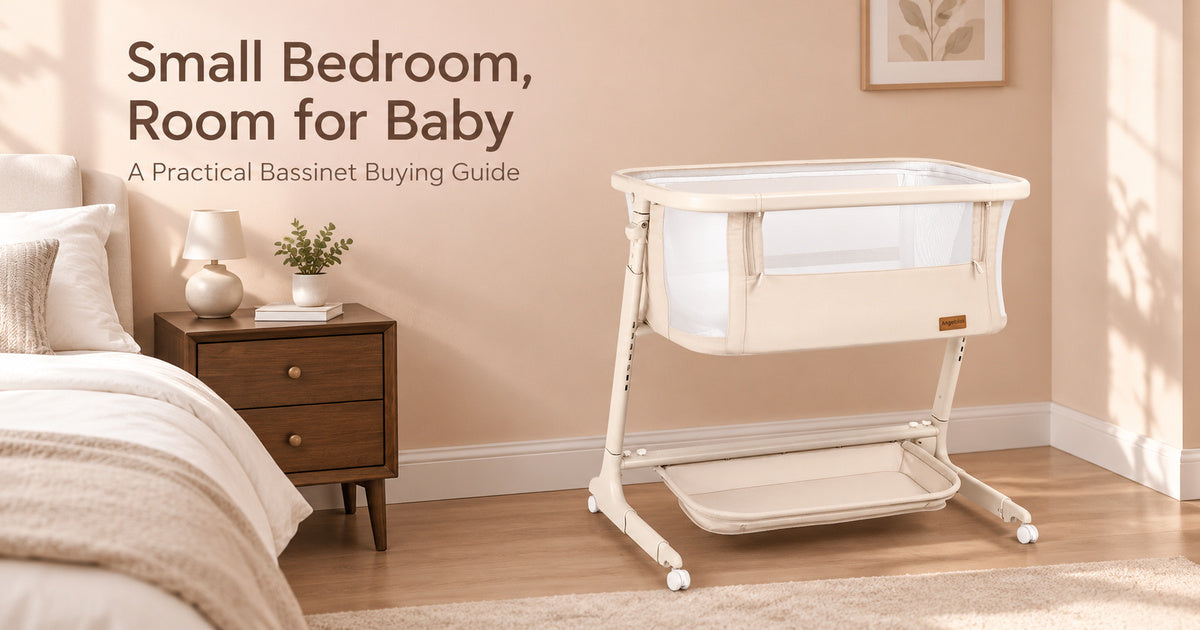



Choosing a bassinet often comes down to a practical question: would you prefer an independent sleep space near your bed, or a bedside sleeper designed to attach to a compatible adult bed?
The main difference between a bedside bassinet and a regular, standalone bassinet is how they are designed to be used. A standalone bassinet provides an enclosed, independent sleep space. A bedside sleeper is designed to attach to a compatible adult bed when used in bedside mode, following the manufacturer’s instructions.
Some products offer both options. Understanding the differences can help you choose a setup that suits your bedroom and everyday routine.
What’s the Difference Between a Bedside Bassinet and a Standalone Bassinet?
“Bedside bassinet” sometimes describes any bassinet placed beside an adult bed. In this guide, it means a bedside sleeper specifically designed for an attached bedside mode.
| Feature | Bedside Sleeper | Standalone Bassinet |
|---|---|---|
| Setup | Attaches to a compatible adult bed in bedside mode | Stands independently |
| Side panel | May lower or open when correctly installed in bedside mode | Remains enclosed during use |
| Bed compatibility | Requires a compatible bed and correct attachment | Does not attach to the adult bed |
| Placement | Bedside mode requires a suitable position beside the adult bed | Offers more placement flexibility within the manufacturer’s instructions |
| Multiple modes | Some models also work as standalone bassinets | Features vary by model |
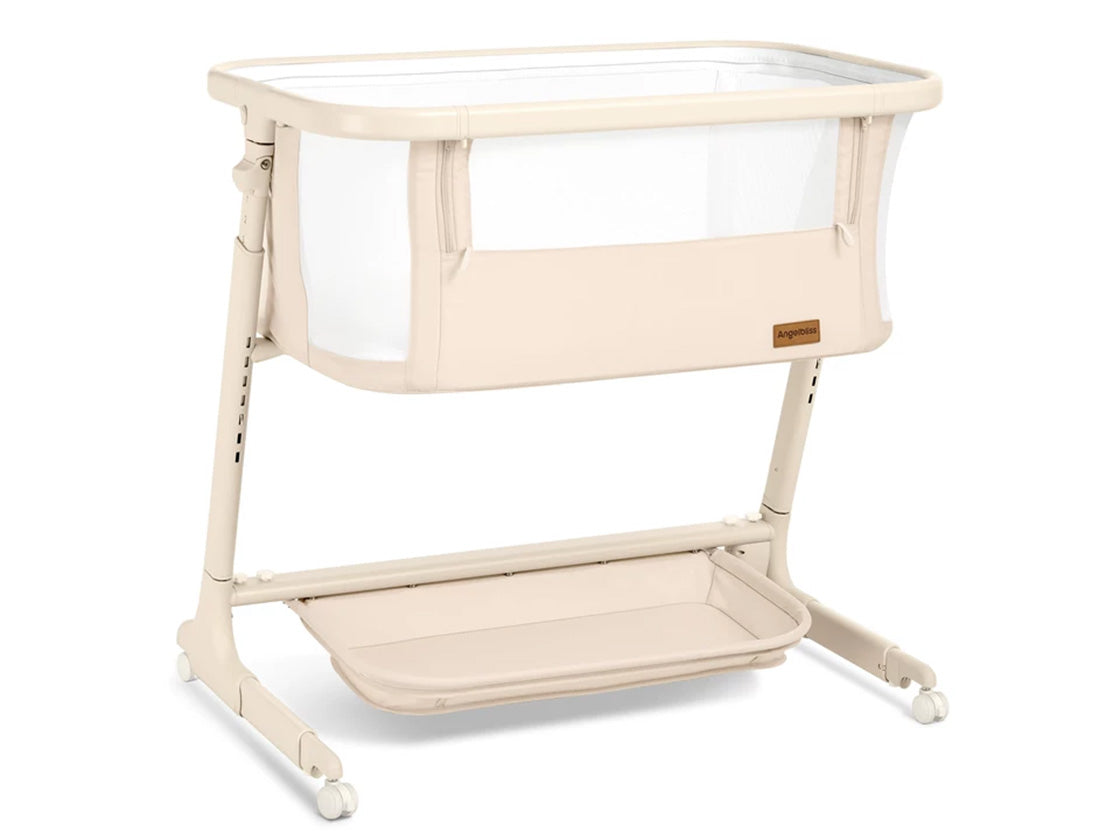
These categories can overlap. For example, the Angelbliss BN03 3-in-1 bassinet offers standalone bassinet, bedside sleeper, and rocking modes. When comparing a convertible model with a regular bassinet, check how each mode is set up and which features you would actually use.
When Might a Bedside Bassinet Be a Better Fit?
A bedside sleeper may suit parents who want their newborn close during nighttime care while maintaining a separate infant sleep surface.
Before choosing one, check whether your adult bed meets the product’s compatibility requirements. Mattress height is only one consideration—the bed frame, attachment points, and installation method also matter.
Look for clear instructions covering:
- Compatible adult-bed types and heights.
- How to secure the sleeper and prevent gaps.
- The correct position of the side panel.
- How to switch between bedside and standalone modes.
Adjustable height alone does not establish compatibility. Always check the complete instructions for the specific model.
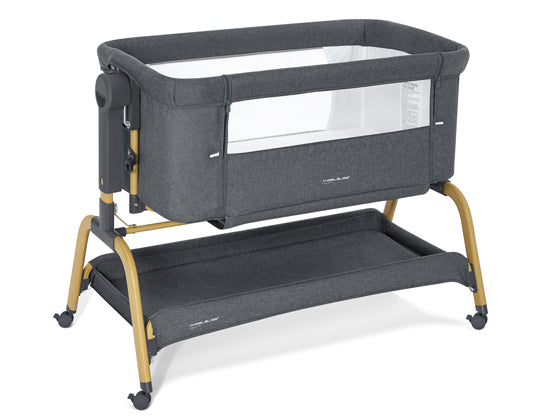
If extra convenience features matter to you, the Angelbliss BN13 electric bedside bassinet offers height adjustment, a remote control, and built-in sound options. Consider which features fit your routine after checking the model’s setup and compatibility requirements.
When Might a Standalone Bassinet Be a Better Fit?
A standalone bassinet may be a practical choice if you prefer a separate, enclosed sleep space without attaching anything to your bed.
It can also suit bedrooms where the adult bed is incompatible with a bedside sleeper or where a different position in the room works better.
A standalone bassinet can still be placed near your bed, allowing you to keep your baby nearby on a separate sleep surface.
Some models include wheels or folding features. Check the instructions before moving or folding the product, including whether the baby must be removed first and when the wheel brakes must be engaged.
What Should You Check Before Choosing Either Type?
A Firm, Flat Sleep Surface and Proper Setup
Choose a product intended for infant sleep that meets the applicable requirements where it will be used.
The CPSC’s guidance on bassinets and other infant sleep products recommends using an appropriate sleep space, placing babies on their backs, and keeping pillows, blankets, and other soft items out.
Follow the product’s assembly instructions and use the supplied mattress or a replacement explicitly approved by the manufacturer. Do not add extra mattresses, padding, positioners, or inclined inserts. Use only a properly fitted sheet intended for that mattress.
Bed Compatibility and Available Space
Measure the area where you plan to use the bassinet, including its full footprint and the space needed to get in and out of bed.
For a bedside sleeper, confirm the required bed height, frame compatibility, attachment method, and positioning. Never lower the side of a regular bassinet or improvise a bedside attachment.
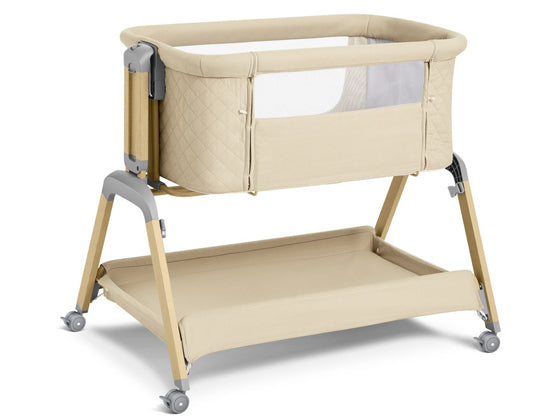
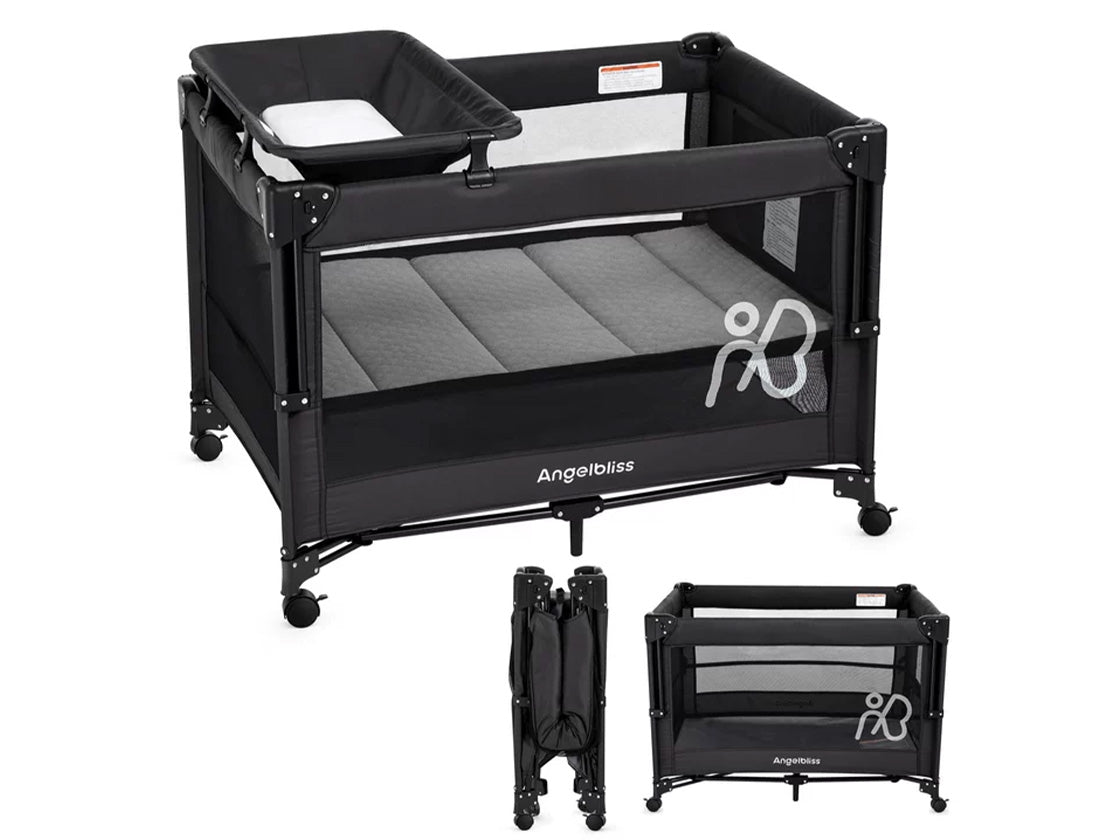
If you would prefer one product for several daily routines, the BCR03-PRO 5-in-1 bassinet and playard offers bassinet, bedside sleeper, and playard modes, along with a changing table and a folding frame. Before choosing it, measure the floor area you can dedicate to it and leave a clear route beside your bed. Check the setup instructions and use limits for each mode.
Your Baby’s Development and Product Use Limits
Check both the weight limit and the developmental milestones listed in the manual. Stop using a particular mode as soon as your baby reaches any of its stated limits, even if your baby’s weight is still below the maximum.
Do not assume every bassinet is suitable until the same age. For a convertible product, the bassinet, changing table, and playard may have different limits.
Cleaning and Everyday Convenience
Removable fabric, accessible storage, and straightforward assembly can make daily care easier. Check which parts are washable, how they should be cleaned, and whether replacement components are available.
These details can help you choose between suitable options once you have checked the intended use, dimensions, and installation requirements.
Frequently Asked Questions
Is a bedside bassinet the same as bed-sharing?
No. A correctly installed bedside sleeper provides a separate infant sleep surface. Bed-sharing means a baby sleeps on the same surface as an adult.
The NIH Safe to Sleep guidance on room sharing describes keeping your baby in your room, near your bed, on a separate sleep surface designed for infants. Keep adult pillows, blankets, and bedding out of the baby’s sleep space.
Can every bassinet be used with the side lowered?
No. Only use an open or lowered side when the product is specifically designed for that mode and installed exactly as instructed. When using the bassinet in standalone mode, follow the manufacturer’s instructions for raising and securing the side panel.
When should a baby stop using a bassinet?
Follow the limits in your model’s manual. These may include weight or developmental milestones, such as pushing up on hands and knees. Stop using the bassinet as soon as your baby reaches any stated limit, and transition to an appropriate sleep space.
Which Type Should You Choose?
A bedside sleeper may fit your routine if you want an attached bedside setup and have a compatible adult bed. A standalone bassinet may work better if you prefer independent placement without an attachment.
A convertible model can offer both options, but each mode has its own setup requirements. Start with your bedroom measurements, check the instructions, and choose the features that make sense for your family.